
News for November 10, 2026

DigiBitPlay Frontend Adds Free Dual-Screen Handheld Support
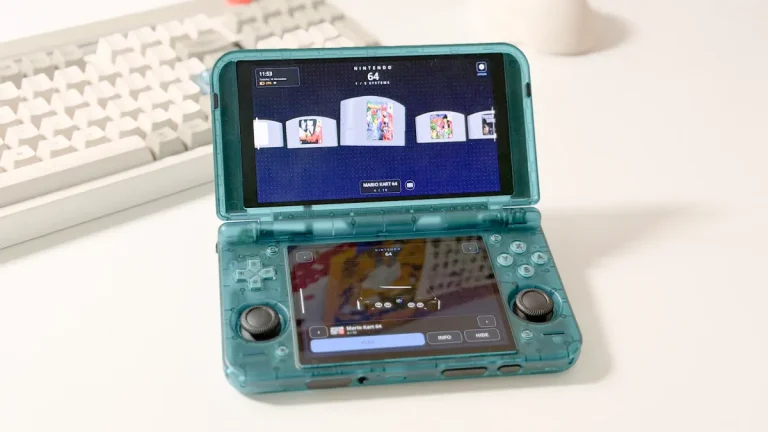
DigiBitPlay Frontend Adds Free Dual-Screen Handheld Support

DigiBitPlay, an Android retro gaming frontend, has added support for dual-screen handhelds at no cost, according to Retro Dodo. The feature had previously been unavailable or restricted, and its addition brings the frontend in line with the growing number of dual-screen Android devices aimed at emulating systems like the Nintendo DS and 3DS. DigiBitPlay is one of several frontends competing to organise and launch emulated games on Android handhelds. via retrododo.com

Amiga Addict Issue 45 Focuses on Flight Simulators

Issue 45 of the English-language Amiga Addict magazine has been published, with a focus on flight simulations. Christian Cawley surveys the history of the best Amiga flight games and simulators, with contributions from MicroProse founder "Wild Bill" Stealey and Bruce Shelley. The issue also covers the Amiga Corporation and Hyperion agreement and its implications for AmigaOS, an interview with former Commodore employee Jeff Bruette, and a chat with Matt Broughton about The One for Amiga magazine. The cover disc includes three public-domain 1990s titles, Bob's Garden, Megaworm and Tetris Pro, plus reviews of new games Hyper Runner and Blue and Red: Fight the Robots, and a CD32 Corner feature on James Pond 3: Operation Starfish. via amiga-news.de

Seq MIDI Sequencer for AmigaOS 4 Updated to 3.4

Tuomas Hokka has released version 3.4 of Seq, a MIDI sequencer for AmigaOS 4. The update adds new buttons in the Song view that let users start a song from a selected position and insert song steps, along with help texts explaining the controls. The overall layout has also been reorganised. Seq remains freeware and is available for download from OS4Depot. via amiga-news.de

Hollywood 11 Manual Now Available in German

The manual for version 11 of Hollywood, the multimedia-oriented programming language with Amiga roots, is now available in German. Dominic Widmer and Helmut Haake carried out the translation, which runs to almost 1,500 PDF pages given the scope of the language's features, with the AmigaGuide version exceeding 4 megabytes of plain text. The German manual can be downloaded free of charge from the Hollywood portal in AmigaGuide, PDF, HTML and CHM formats. Hollywood lets developers build cross-platform applications and games and includes a compiler for packaging them for systems such as Android. via amiga-news.de

Twinkle Tale Mega Drive Gets Retro-Bit Physical Cartridge

Twinkle Tale Mega Drive Gets Retro-Bit Physical Cartridge

Limited Run Games has opened pre-orders for a new physical Mega Drive/Genesis cartridge release of Twinkle Tale, produced in partnership with Retro-Bit. The game, developed by ZAP Corporation and originally released in Japan in 1992, has never had an official release outside the country. Twinkle Tale mixes dungeon-crawling with run-and-gun action, following apprentice magician Saria on her journey. The new release is expected to arrive early in 2027. via timeextension.com

Maldita Castilla Amiga Port Gets Playable First-Level Demo

MainakeProject's in-development Amiga AGA port of Maldita Castilla, also known as Cursed Castilla, now has a playable demo covering the entire first level, including its final boss, available on itch.io. A gameplay video has also been posted to YouTube. The port is being made with the consent of original developer Locomalito and uses the original assets, including the soundtrack by Gryzor87. Maldita Castilla is an arcade-style action platformer first released in 2012, drawing on Spanish myths and in the style of classics like Ghosts 'n Goblins, and the developer states no generative AI is used in its creation. via amiga-news.de

DataFlyer 500 Amiga disk controller PAL chips recreated

A user known as keithgh1 has published replacement logic equations for the DataFlyer 500, a side-expansion SCSI/IDE hard disk controller made for the Amiga 500 by Expansion Systems. The card's original PAL chips were copy-protected and could not be read directly, so the replacements were reconstructed through black-box testing of the originals, a process described as taking years. The files are available on GitHub as CUPL source code and ready-to-burn JEDEC images for GAL16V8 chips, sorted by board revision, and have reportedly been tested successfully in real cards. via amiga-news.de

Retro Hour podcast covers Gremlin Graphics revival

Episode 553 of The Retro Hour podcast focuses on the revival of British games publisher Gremlin Graphics. Guest Alan Turvey, a long-standing fan now helping bring the brand back under Gremlin Graphics Classics, discusses how a project built around Monty Mole led to a partnership with Gremlin founder Ian Stewart. The conversation also touches on plans to introduce the publisher's classic characters to new audiences, the role of bedroom coders in the project, Turvey's work with Midnight Brew, and the reconstruction of lost Gremlin artwork for an upcoming book. Gremlin Graphics was a Sheffield-based publisher known in the 1980s and 1990s for titles across home computers and consoles. via amiga-news.de

Jammy Amiga Emulator Reaches 0.0.31, Adds Linux Support

Developer Jim Shaw has updated his Amiga emulator Jammy to version 0.0.31, bringing it from version 19 over the course of several months. The project remains in alpha but now runs on Linux as well as Windows. Shaw says he has fixed numerous issues around cycle accuracy, fetching, scrolling, sprites and AGA support, and that the emulator now runs considerably faster. He has indicated further work and new features are planned as development continues. via amiga-news.de

BlueSCSI Toolbox 1.5 Adds AmigaOS 3.1 Support

The BlueSCSI Toolbox, a utility combining a CD changer and an SD Transfer Tool for BlueSCSI v2 and ZuluSCSI devices on Amiga, has reached version 1.5. The CD changer lets users switch between CD ISO images stored on an SD card whilst the Amiga is running, while the SD Transfer Tool handles moving files from the card onto the machine. Version 1.5 lowers the minimum requirements for its ReAction classes so it now runs on both AmigaOS 3.1 and 3.2, alongside a number of bug fixes. via amiga-news.de

CacheCop 1.0 Diagnoses Amiga DMA Cache Bugs

Stefan Reinauer has released CacheCop 1.0, a diagnostic tool for the Amiga aimed at catching faulty use of the CachePreDMA and CachePostDMA system calls. These calls manage the processor's cache during direct memory access by devices such as hard disk controllers, network cards and SCSI hardware, ensuring the CPU does not read stale cached data after a device writes to main memory. Drivers that skip or misuse the final CachePostDMA step can leave memory in an inconsistent state, producing data errors or hard-to-trace crashes. CacheCop is designed to help developers spot these mistakes. via amiga-news.de